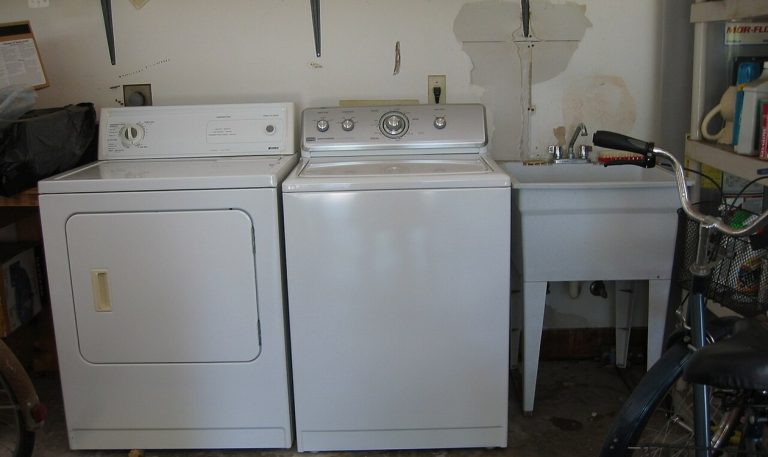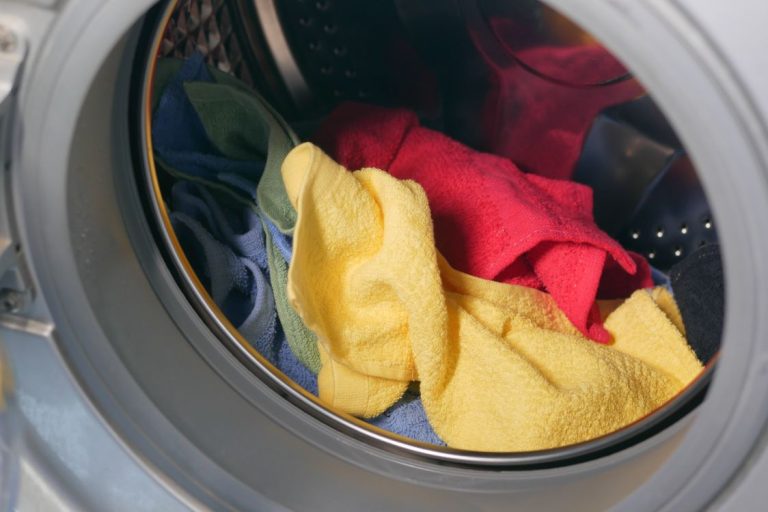
A washing machine not draining leaves you with a drum of grey water and a load of soaking laundry — and it is one of the most fixable problems in the laundry room. Most causes are simple blockages you can clear yourself in under half an hour with a towel, a shallow tray and a bucket. This guide walks through the causes in the order you should check them, from the free two-minute fixes to the pump itself, and flags the point where calling a repairer is the smarter spend.
Safety first: unplug the machine and turn off its water supply before you open anything. Keep towels down — even a “drained” machine holds a litre or two of water in the pump and hoses.
1. The drain hose is kinked, crushed or blocked
The simplest cause is the most common. Pull the machine forward gently and look at the grey corrugated drain hose at the back. If the machine was pushed back too far, the hose kinks flat and nothing can pass. Check that the hose is not pushed too far down the standpipe either — more than about 10–15 cm (4–6 inches) inside can cause siphoning problems — and that its end is not sealed airtight into the pipe.
Fix: straighten the hose, clear any visible lint plug at the end, and make sure the standpipe height suits your model (usually 60–90 cm from the floor). Then run a rinse-and-spin cycle and watch it drain.
2. The pump filter is clogged (front loaders)
Front load machines have a coin-trap filter that catches coins, hair ties, lint and the occasional sock before they reach the pump. When it fills up, draining slows to a stop — and many machines flash a drain error (our Samsung washer error codes and LG washer error codes guides translate the exact codes).
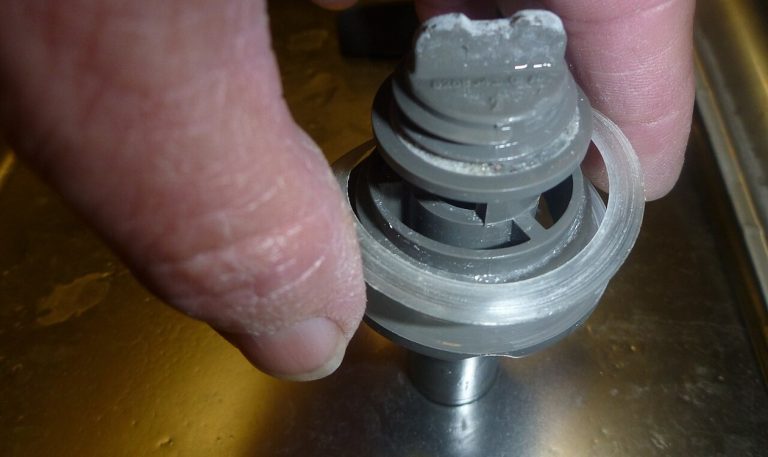
Fix: open the small flap at the bottom front. Place a shallow tray under it, unscrew the filter slowly and let the water escape in stages into the tray or a bucket. Pull out the debris, rinse the filter under a tap, check the hole it came from for a trapped coin or button, and screw it back in firmly — a loose filter leaks on the next cycle.
3. A small item is stuck in the door seal or drum (front loaders)
A baby sock or underwire can slip between the drum and the seal and migrate down to block the sump hose. If the filter is clean but draining is still poor, run your fingers around the inside of the grey door gasket, especially the bottom fold, and check the drain holes at the back of the drum.
4. The drain pump itself is jammed or dead
With the filter removed you can usually see the pump impeller at the back of the filter housing. Spin it with a pencil: it should turn with slight magnetic resistance and spring a little. A coin or hair grip jammed in the blades stops the pump dead.
If the impeller turns freely but the machine hums without draining, or grinding noises come from the bottom during drain, the pump motor is likely failing. Replacement pumps are inexpensive parts, but fitting one involves tipping the machine and disconnecting hoses and wiring — a reasonable Saturday job for a confident DIYer, and a standard repairer job otherwise. Note the full model number before ordering; pumps are model-specific.
5. The lid switch or door lock is faulty (top loaders especially)
Most machines will not drain or spin if they think the door is open. If your washer fills and agitates but stops before draining, check that the door clicks shut properly and that nothing is trapped in the latch. On top loaders, the lid switch under the rim is a common failure — the machine behaves as if the lid never closes. This is an electrical part; unless you are comfortable testing with a multimeter, hand this one to a repairer.
6. The standpipe or house drain is blocked
Sometimes the machine is innocent. If water backs up out of the standpipe during draining, the restriction is in your home’s plumbing, not the washer — the same household blockage pattern we cover in Dishwasher Not Draining. A drain snake or a plumber sorts it; no amount of washer repair will.
7. A control or error-code lockout
Modern machines sometimes refuse to drain after an unbalanced-load or overflow error until the error is cleared. Unplug the machine for five minutes, plug it back in and run a drain-and-spin cycle. If an error code returns immediately, match it in our Whirlpool washer error codes guide (or the Samsung and LG guides linked above) — the code will usually point straight at the pump, the pressure switch or the control board, which tells you whether the fix is yours or a repairer’s.
Quick diagnosis table
- Water will not leave at all, no sound: filter fully blocked, or pump dead.
- Draining is slow: filter half-blocked, hose kinked, or standpipe partially clogged.
- Humming during drain: pump jammed by a small object.
- Grinding noise: impeller damaged or pump failing.
- Water backs up onto the floor: house drain or standpipe blocked.
- Machine stops before drain with door errors: door lock or lid switch.
When to call a repairer
Call a professional if the pump needs replacing and you are not comfortable tipping and opening the machine, if you suspect the control board, or if the machine is under warranty — opening it yourself can void coverage. For brand-specific guidance, the official support pages at Samsung Support and LG Support list model-specific drain diagrams and warranty repair booking.
A washing machine not draining is annoying, but it is rarely the end of the machine. Nine times out of ten it is the filter, the hose or a coin in the pump — fifteen minutes, a towel, and no bill.